What Is the Wood Element? Meaning, Strengths, and Balance
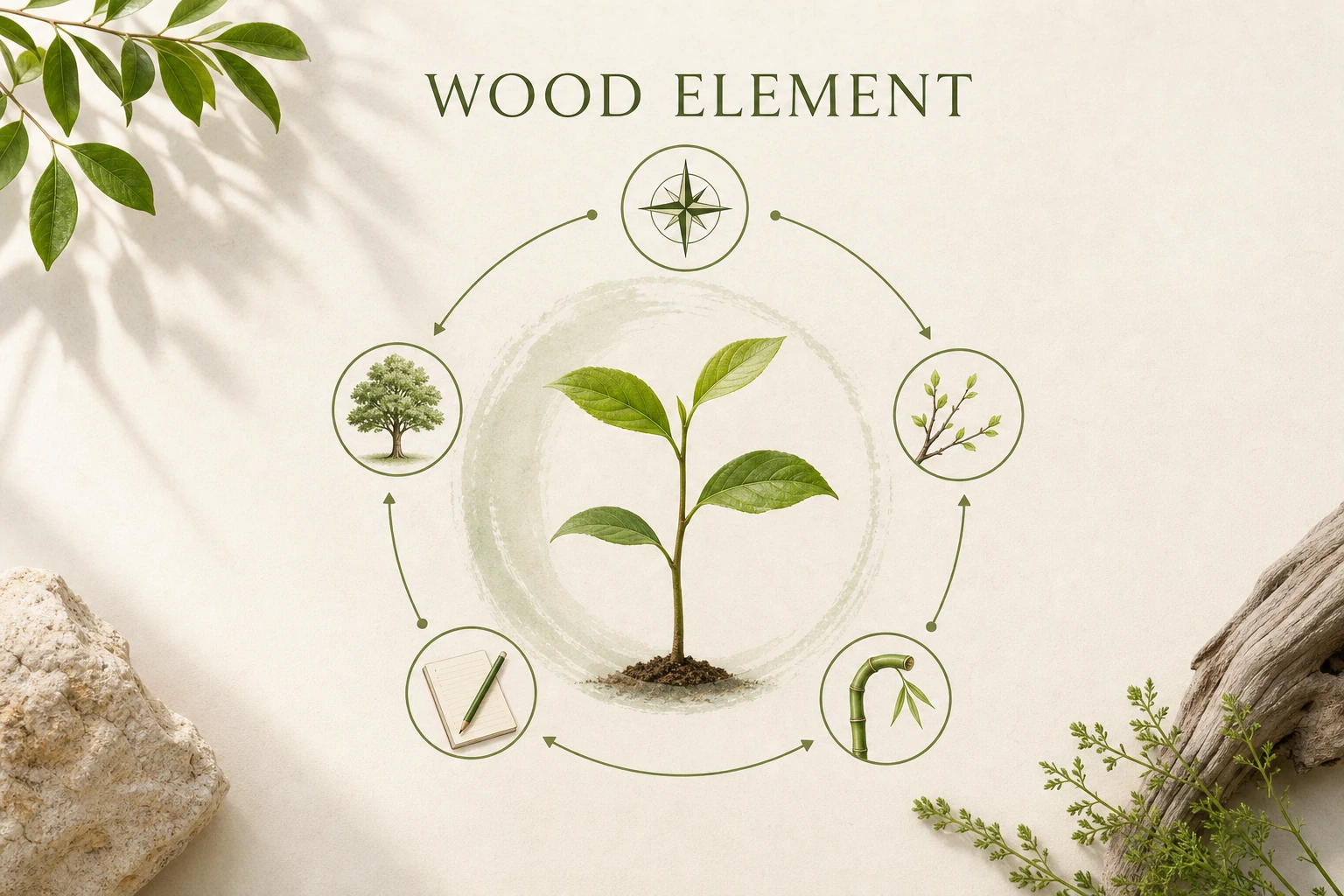
In the Five Element tradition, Wood represents growth, direction, and purposeful movement. It is associated with spring, but its value is not limited to a season or a birth chart. Wood is a pattern you can recognize whenever life asks for this kind of response.
Some people naturally lean toward Wood, while others call on it in specific situations. Neither makes someone a fixed Wood type. Think of the Pioneer as an archetype for reflection, not a diagnosis.
The core meaning of Wood
At its best, Wood supports initiative, imagination, courage to begin, and the ability to see a path forward. These qualities become useful when the situation genuinely calls for them. They are not proof that one person belongs to a superior category.
When Wood feels available
You may notice initiative, imagination, courage to begin, and the ability to see a path forward. The important signal is not a dramatic feeling. It is the sense that your response fits the task in front of you.
When Wood becomes excessive
Too much emphasis on this mode can look like rushing, frustration with delay, overcommitting, or treating every obstacle as something to force through. The answer is rarely to reject Wood. It is to invite another quality that creates proportion.
When Wood feels hard to access
A low-access moment may look like hesitation, lack of direction, or waiting for perfect confidence before beginning. This does not mean your chart is broken. It means a small practice, environment change, or supportive relationship may help you approach the situation differently.

Four ways to practice Wood
- Choose one next step and make it visible.
- Move your body when thinking has become circular.
- Set a direction, then leave room to revise it.
- Practice progress without turning every day into a competition.
Wood in relationships
Wood often communicates through plans, possibilities, and invitations to move. It feels respected when its direction is heard, but it also benefits from partners who can ask about pace, resources, and impact without dismissing the idea.
Use this language to ask better questions, not to label someone from a distance. People shift across roles, seasons, and circumstances.
Wood at work and in creative projects
Projects that need initiation, exploration, or momentum can welcome Wood. Metal helps edit the scope, Earth adds continuity, Water deepens the thinking, and Fire helps the idea become visible.
Using jewelry as an intention cue
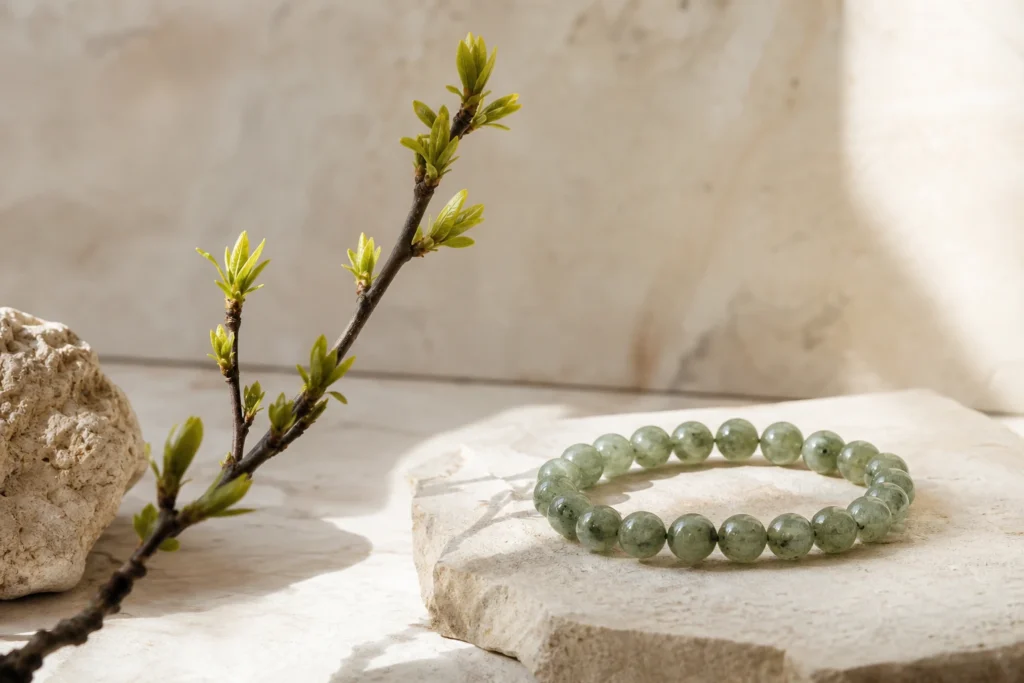
If you enjoy jewelry, green aventurine, green jade, moss agate, or other green stones can become a visual or tactile reminder of the quality you want to practice. The material itself does not diagnose or repair an element imbalance. Its value comes from the intention and behavior you connect to it.
Ask where Wood would be useful today, not whether Wood defines who you are.
A thoughtful note
The Five Elements are presented here as a traditional cultural framework for reflection and intentional living. They are not a medical or psychological diagnosis, and crystals or symbolic practices are not a substitute for professional health care. Choose the ideas that feel useful, and leave the rest.