How the Five Elements Work Together: Generating and Controlling Cycles
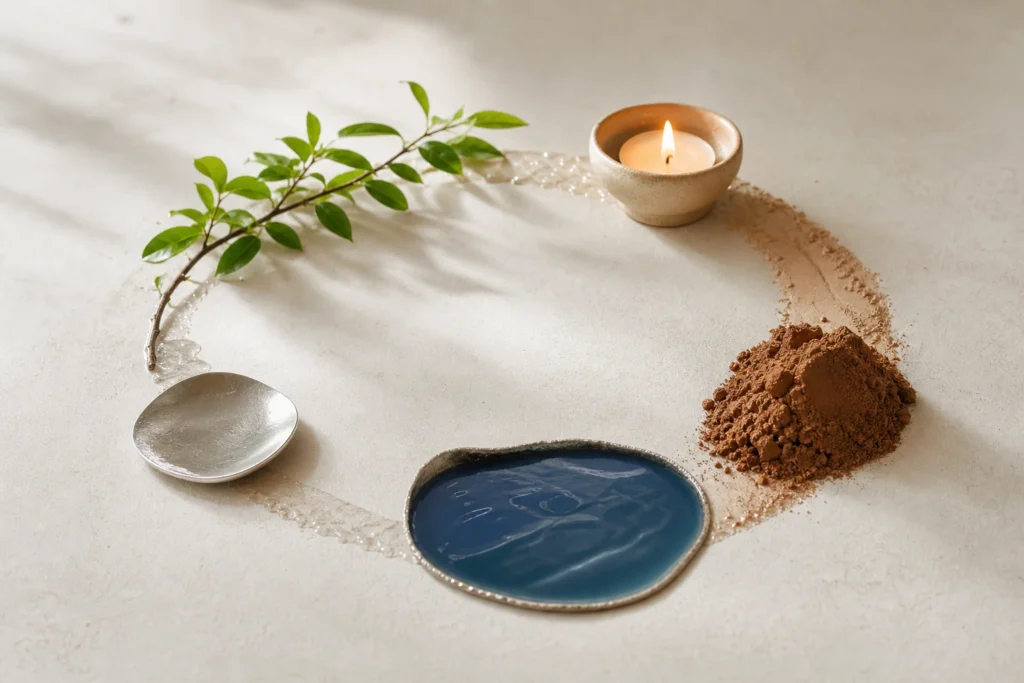
The Five Elements make the most sense when we stop treating them as five separate personality labels. In classical Chinese thought, Wood, Fire, Earth, Metal, and Water describe five patterns of change. Their meaning comes from relationship: how one movement feeds another, how one prevents another from becoming excessive, and how the whole system keeps adapting.
If you are new to this framework, begin with our guide to what the Five Elements are. This article goes one step further by focusing on the two cycles that keep the system moving: the generating cycle and the controlling cycle.
The generating cycle: how energy supports energy
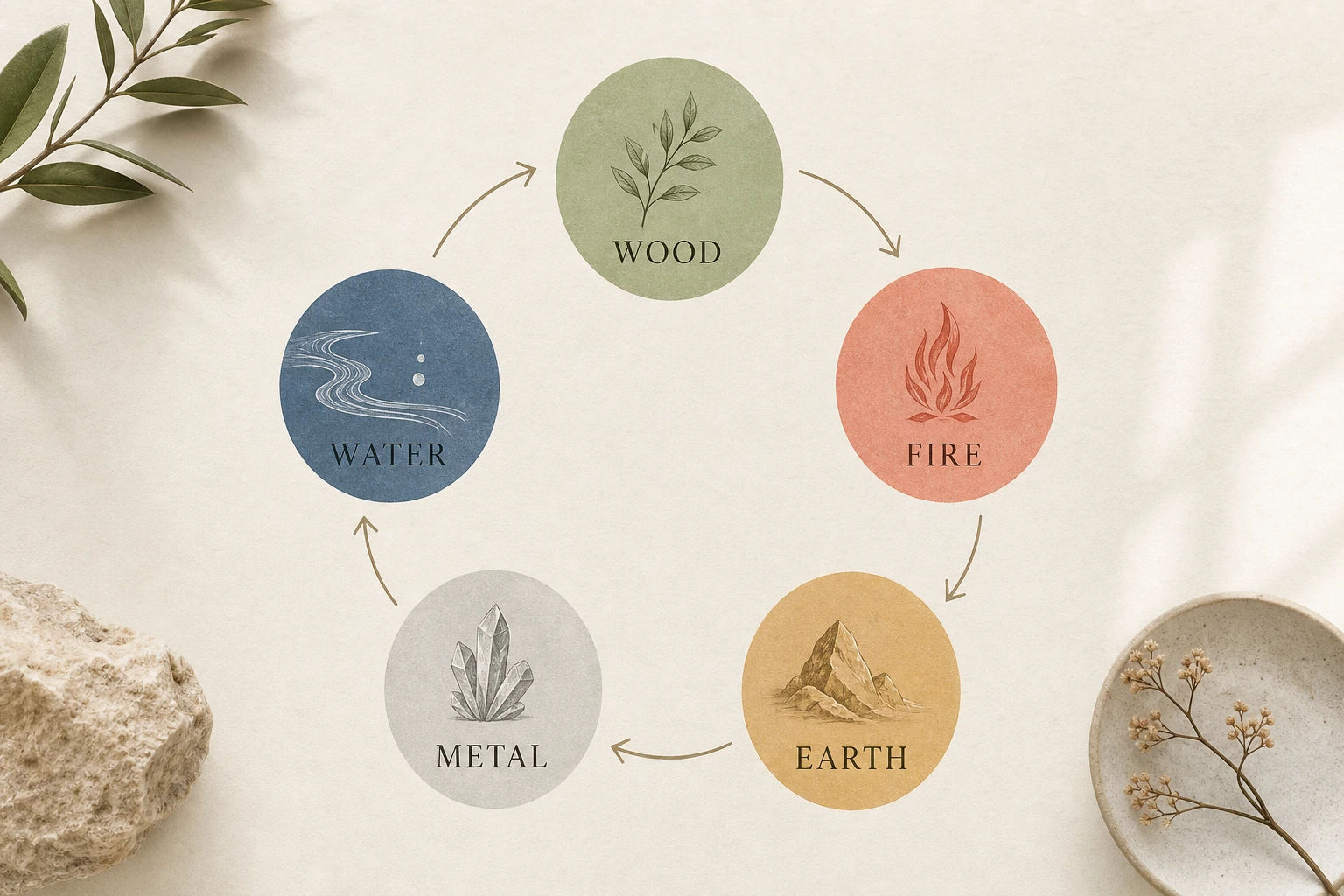
The generating cycle is often described as a parent-and-child relationship. Each element creates conditions that help the next element emerge. It does not mean that one element literally produces another in your body. It is a visual language for understanding how one kind of action can make the next kind easier.
- Wood feeds Fire: direction and growth give passion somewhere to go.
- Fire creates Earth: expression and experience leave behind insight, connection, and resources.
- Earth bears Metal: stability makes it possible to form standards, boundaries, and useful structure.
- Metal supports Water: editing and release create space for reflection and fresh perspective.
- Water nourishes Wood: rest, depth, and imagination make new growth possible.
A practical example
Imagine starting a creative project. Water appears when you pause, research, and listen. Wood turns that reflection into a direction. Fire helps you share the idea and gather enthusiasm. Earth turns the excitement into a repeatable routine. Metal edits the result, protects the scope, and decides what to keep. The next round of Water begins when you step back and learn from what happened.
The controlling cycle: how energy creates healthy limits
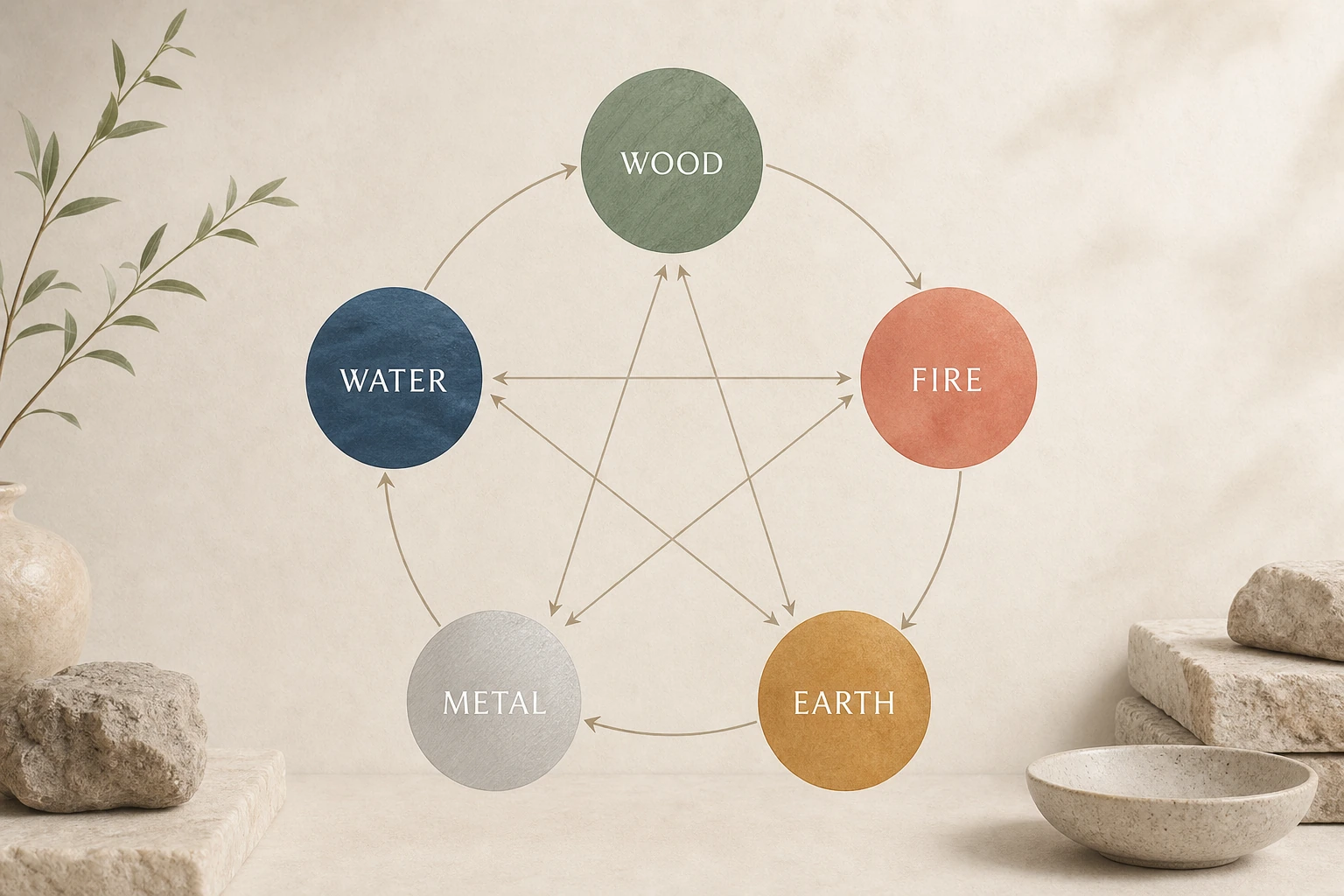
The controlling cycle is sometimes translated as conquest or restriction. In everyday life, regulation is a more useful word. Each element applies a counterweight to another so that no single tendency dominates the entire system.
- Wood regulates Earth: growth challenges routines that have become too fixed.
- Earth regulates Water: commitments and boundaries contain endless possibility.
- Water regulates Fire: reflection cools impulsive expression.
- Fire regulates Metal: warmth and spontaneity soften rigid standards.
- Metal regulates Wood: focus and editing prevent expansion from becoming scattered.
Support without limits can become excess. Limits without support can become stagnation. Balance needs both.
How to use both cycles in real life
When you feel stuck, do not ask which element is good or bad. Ask two better questions: What quality would support the next useful step? What quality would gently regulate what is becoming excessive?
A flood of ideas may need Metal before it needs more Wood. A rigid plan may need Fire before it needs another rule. Exhaustion may need Water before motivation. This is why element balance is dynamic rather than a permanent score to perfect.
You can explore your current pattern through the Five Within self-test, then use the result as a prompt for observation rather than a fixed identity.
A system, not a ranking
No element is inherently more spiritual, productive, or desirable than another. Growth needs rest. Expression needs boundaries. Stability needs renewal. The value of the Five Elements lies in noticing relationship and choosing a more fitting response.
A thoughtful note
The Five Elements are presented here as a traditional cultural framework for reflection and intentional living. They are not a medical or psychological diagnosis, and crystals or symbolic practices are not a substitute for professional health care. Choose the ideas that feel useful, and leave the rest.